
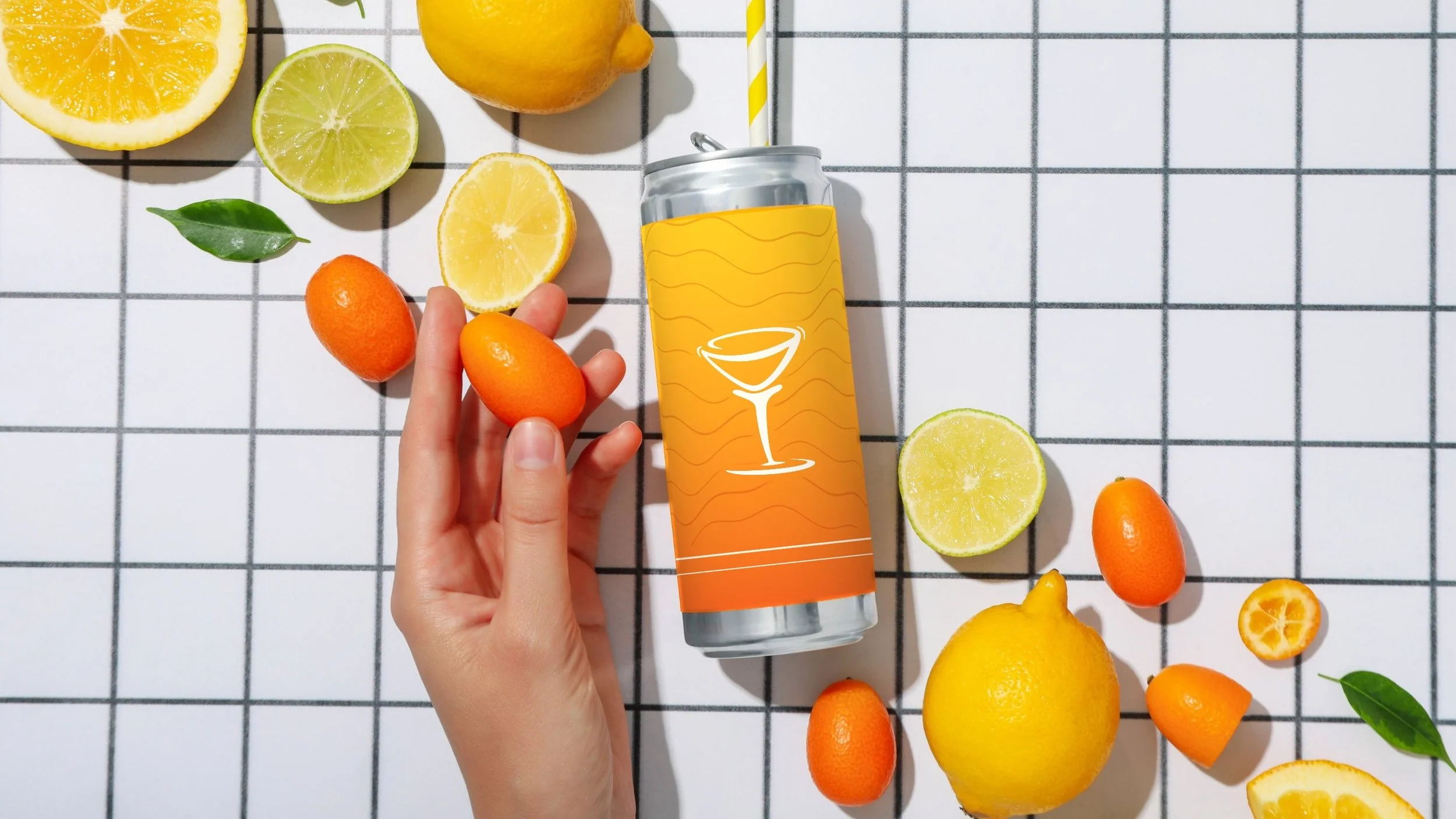
Your guests already order your signature cocktail by name. Off-premise lets them take it home.
A few weeks ago, a restaurant executive told me something interesting that she noticed in her product mix. Their half-gallon margarita, sold to go, was moving far better than anyone on her team expected. Guests weren't just ordering a drink with dinner. They were taking it home for the weekend and adding it to catering orders.
That's not a fluke. It's a gap most beverage programs haven't closed yet.
Off-premise is now the majority of restaurant traffic
According to the National Restaurant Association, nearly 75% of restaurant traffic now happens off-premises. Yet most cocktail programs still stop at the restaurant's four walls. Every takeout, delivery and catering order that leaves without a drink is revenue left on the counter.
The legal window is wide open, too. As of August 2026, 33 states plus Washington, D.C. permanently allow cocktails to go, according to the Distilled Spirits Council. Rules on containers, labeling and food purchase vary by state, so check yours before you launch.
Catering is the biggest gap
Catering has been one of the fastest-growing channels in the industry. Monkey's 2026 State of Catering report projects the U.S. catering market will grow 5.3% a year through 2032, compared with roughly 3% growth for restaurants overall in 2025. Its top-performing brands grew catering sales 10 to 20% year over year in the first quarter of 2026.
That growth hasn't carried over to beverage. Think about how many of your catering orders are for birthdays, holiday parties, game days and other celebrations. Now think about what would happen to your per-person average if even a fraction of those orders added a round or two of drinks.
Catering exists to help people serve great food to a group without the stress of making it themselves. So why have drinks been left out? Right now, the person ordering your food still has to stop at the liquor store and work out what to buy and how much for their party. Take that step off their plate by adding your signature cocktail to the same order, and I'd bet many of them would jump at it.
What selling cocktails off-premise actually takes
A to-go cocktail isn't shaken to order. Cocktails-to-go laws generally require a properly sealed, tamper-evident container, so if a guest gets pulled over on the drive home, they can prove the drink was never opened. That means the work happens before service, not during it.
Running it in-house looks like this:
Batch ahead of service. Most groups already batch for on-premise. Off-premise means preparing a second batch, sized for to-go demand.
Package on site. Each location needs a canning or bottling machine, so staff can grab a sealed drink and add it to a takeout or delivery order.
Manage the inventory. Fresh-squeezed juice needs prep every day, and pasteurized juice every two to three days. Overestimate demand and product goes down the drain. Underestimate it and you sell out before reaping the full benefits of this additional revenue stream.
For a handful of locations, that's manageable. Once a group grows past about 3 to 5 locations, it starts to get very hard to manage. You're buying packaging equipment for every location and spending hours of prep a day across the group, and every bar has to turn out the same drink.
Groups with a commissary kitchen are better set up to do this at scale, since batching and packaging can happen in one place and ship out to every location.
An easier lift alternative: The other option is working with a co-packing partner like Velvet Root. We reverse-engineer your recipe for shelf stability, rebalancing Brix and adjusting acid so your shelf-stable cocktail tastes exactly like the recipe your guests know and love. Low minimum order quantities let you pilot at a few locations before rolling out, and custom-branded cans put your branding on every drink that leaves. Your guests get a more polished product, and your team doesn't carry the operational burden.
Choosing the right to-go format
Cans: single-serve, easy to add to any takeout or delivery order, and built for impulse purchases.
Bag-in-box or half-gallon pouches: built for groups, parties and catering, with a higher ticket per order.
Bottles: ideal for shareable occasions. A 750ml bottle holds five servings (based on a 5 oz pour, with dilution already built in). Gives you the best options for the packaging to feel more premium.
Why your own cocktail beats a third-party RTD
The easy route is to stock a few ready-to-drink brands from your distributor and add them to the to-go menu. It works, but it leaves most of the value on the table. Putting your own cocktail in that takeout bag instead gives you three key advantages a third-party brand can't match.
Guests stick with what they trust. Trying a new alcohol brand feels like a gamble. In one survey of people who don't yet drink RTDs, 62% said the brand name would influence whether they'd try one. A third-party can only sell if your guest already knows that brand or is willing to take a chance on it. Your signature cocktail has already earned that trust, often because one of your bartenders recommended it. According to NIQ's 2026 Global Bartender Report, 88% of bartenders make a drink recommendation every shift, and 95% say guests order what they recommend most of the time or more. Every recommendation your team makes at the bar is building demand for the drink you'll be able to sell off-premise.
Familiar brands come with a price tag guests already know. If a guest recognizes an RTD brand, it's usually because they've bought it at a liquor store, so they know roughly what a can costs. Price it above that and it feels like a markup, which makes it hard to hit your beverage cost targets, especially on spirits-based drinks. Your own cocktail doesn't have that problem. The only price your guests have seen for it is the one on your menu, which gives you room to price for margin without anyone feeling ripped off.
Your brand stays in their fridge. The guests ordering your cocktail to go are already fans. Sending them home with it gives them a new way to take a piece of your brand with them. A six-pack of your margarita in the fridge is a small reminder of you every time they open the door, and the best thing to pair with your signature cocktail is your food. Restaurant brands have used retail products this way for years. As this article from National Restaurant News puts it, the idea is that products guests buy outside your restaurant reinforce their trust in your brand, so it's where they spend their dining-out dollars. That's the kind of exposure restaurants usually pay for on social media. Here, it comes with a new revenue stream attached.
The bottom line
Most of your traffic now happens off-premise, and your signature cocktail can go with it. Doing it in-house means batching, packaging equipment and tight inventory management at every location, which can get difficult once a group grows past a handful of locations. A third-party RTD skips that work, but it gives away the trust, pricing control and brand exposure your own cocktail has already earned.
So here are a few questions to take back to your team. How many of your takeout, delivery and catering orders leave without a drink today? Which cocktail do your guests already order by name? And what would it be worth to your group if that drink were sitting in their fridge next weekend?
This post is part of a series on what I learned talking to restaurant executives about their cocktail programs. For more reasons ready-to-pour cocktails may be the right fit for multi-unit groups, start there. And if you want to explore what off-premise could look like for your group, I'm happy to share more in a cocktail consultation.
Where cocktails to go are legal to sell in the US
As of August 2026, 33 states and Washington, D.C. permanently allow cocktails to go, according to the Distilled Spirits Council:
Arizona
Arkansas
Colorado
Connecticut
Delaware
Florida
Georgia
Hawaii
Illinois
Indiana
Iowa
Kansas
Kentucky
Louisiana
Maine
Massachusetts
Michigan
Missouri
Montana
Nebraska
Nevada
New Jersey
North Carolina
Ohio
Oklahoma
Oregon
Rhode Island
Texas
Vermont
Virginia
Washington
West Virginia
Wisconsin
Washington, D.C.
Two more states allow cocktails to go on a temporary basis:
California: set to expire December 31, 2026
New York: authorized through April 9, 2030
Rules on containers, labeling and food purchase requirements vary by state, so check your local regulations before you launch.
